The Making of an Advertising Gender Pay Gap
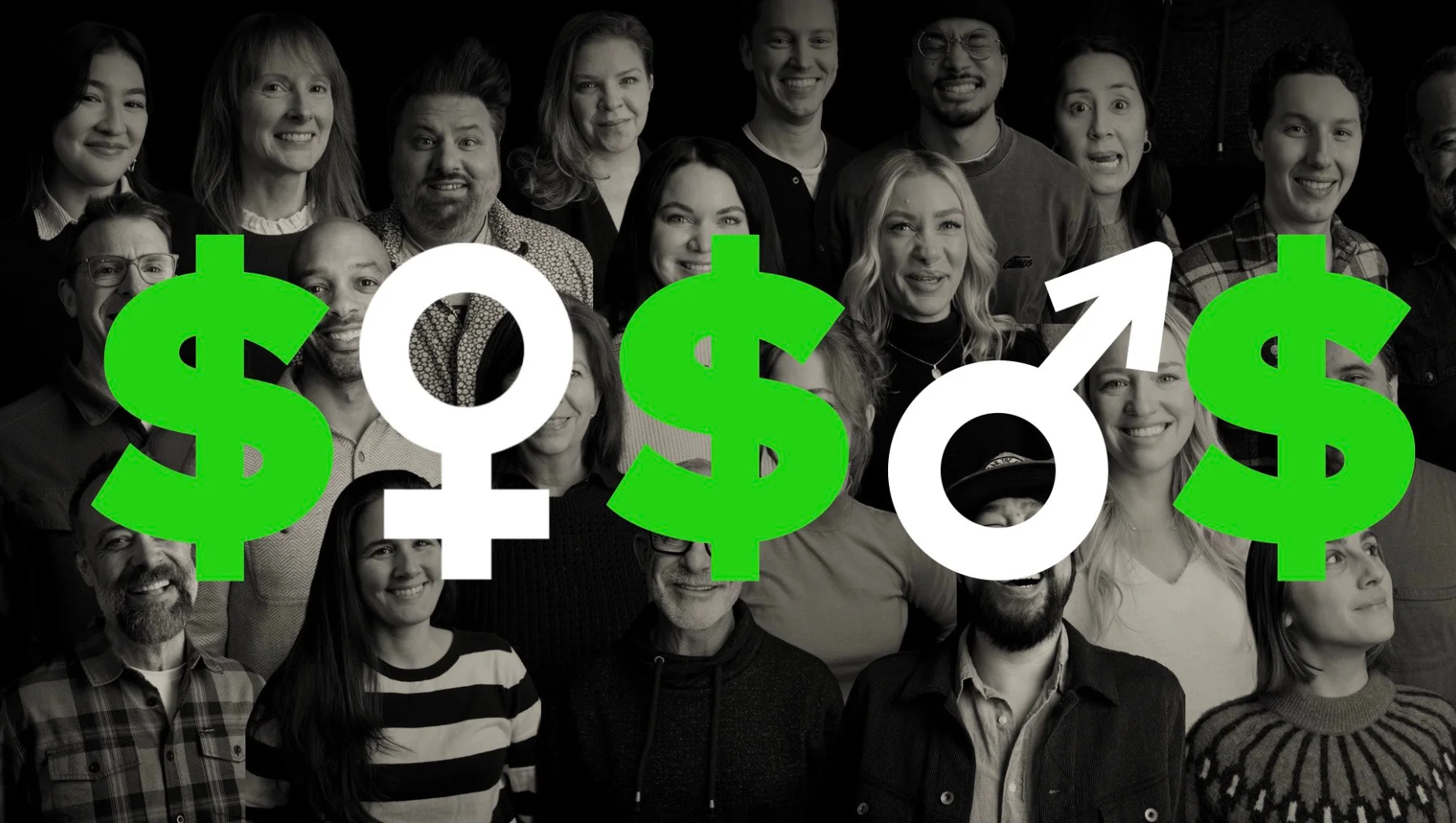
The purpose of our study is to establish a contemporary benchmark, validating the size of the gap in the American ad industry by examining all known variables that contribute to gender-based gaps in pay.
This research isn’t a salary snapshot—it’s a behind-the-scenes look at how the gap is built.
We accounted for the known factors that influence pay—things like education, seniority, performance, and parenthood—and then looked at the human side of compensation. This included relationships and social dynamics, like workplace comfort between the men and women, salary conversations between them, how the gap is perceived differently by gender, and how leadership by gender moves equity forward…or stalls it.
Key Findings
First off, the Pay Gap is Alive and Well in Advertising
- Women were paid 5% less, and 8% less if they were mothers
- The average woman in advertising will lose ~$270,000+ over her career due to her gender
But Pay Perception Isn’t Always Reality
- Both men and women agree, a gap exists. Men were closer to guessing the true size in advertising, women were closer to sizing the national gap
- While 96% of women believed in a gender pay gap, only 33% thought they were personally affected, when in reality, women on average made less than men
- Advertising employees overestimate agency progress on pay equity, but an industry-wide gap shows perception is not reality
Social Dynamics Between the Sexes Plays a Major Role
- Less than 35% of all respondents shared salaries with their colleagues, with men being less likely to share
- Male managers were more likely to stop pay equity progress for women through unresponsiveness
- While women who are less comfortable around men are paid less, men who are uncomfortable working closely or predominately with women are paid more
FAQS
No. This study was led by Jess Watts, now Chief Strategy Officer at DNA&STONE and Dr. Nancy Wayne, Professor Emerita of Physiology at the David Geffen School of Medicine at UCLA, and founder of Women Advancing Together®, and their research scientist and data analytics partner, Dr. Ryan Krone of Elite Research, LLC.
The paper was created after Jess Watts became part of DNA&Stone, and in that capacity she led efforts to provide agency tools and tracking based off her findings, with DNA&STONE’s support.
There was no agency or corporate sponsors in the production of this research. This research was completed with free labor by Dr. Wayne and Jess Watts as an independent consultant, and through a research stipend by UCLA.
Yes, an a priori power analysis was conducted using G*Power v3.1.9.4 to determine the minimum sample size required to find significance, which was reached in this study. The study tracked against known industry demographic and geographic composition.
Across the U.S. labor market the gender pay gap has been remarkably stable over decades, with only gradual change. This data, however, should not be used alone for estimating the prevalence of the gap in real-time, as ongoing shifts in the labor market could affect how representative it is at this point in time, such as layoffs, movement between holding companies and independents and macro changes in US labor, and effects of transparency laws.
This March-May 2023 dataset still captures the underlying system, and is useful for diagnosing mechanisms of the gap, where inequity occurs, and its drivers. The study is well powered and functions as a practical industry baseline for measuring the impact of pay transparency laws/policy, organizational change, and equity efforts. This data set also provides a baseline pre-AI restructuring, as well as a baseline for longitudinal follow-up.
Here's what agencies can do now (and what we've committed to):
1. Annual Pay Equity Audit
2. Publish Clear, Roles-Based Pay Bands Internally
3. Standardize Titles and Leveling Across the Agency
4. Track and Correct Opportunity Equity in Macro Reviews
5. Request for promotion or pay adjustments automatically escalated
6. Publish and communicate pay discussions as a protected right